
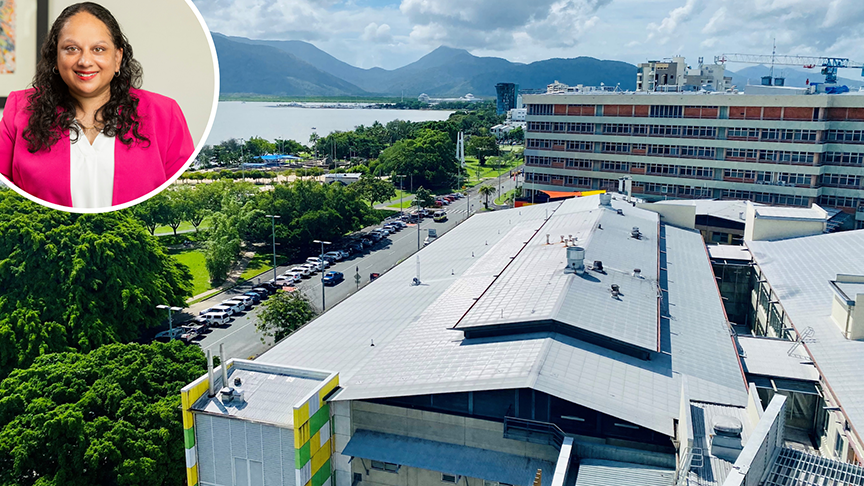
Imagine walking into a Cairns Hospital room and seeing a young father in his 40s, paralysed from a workplace accident, staring out the window day after day.
Or an elderly woman, her dementia deepening in the glare of fluorescent lights and lack of sleep, due to the daily din of the hospital.
These aren’t patients - they’re ‘residents’.
These reluctant residents of our hospitals in the Far North are an unfortunate symptom of a lack of appropriate aged care places or supported residential accommodation in the community.
On any given day, we have between 110-160 long-stay patients calling Cairns Hospital home, not because they need acute care, but because there is simply nowhere else suitable for them to go.
One-third are under 65: younger people with disabilities, brain injuries, or complex conditions awaiting NDIS-funded housing that doesn’t exist.
The other two thirds are older, many living with dementia, rejected by aged care facilities due to ‘challenging behaviours’ or lack of specialist beds.
Some of these patients have been in hospital for more than 350 days. Whilst we provide excellent care, the busy and noisy hospital environment is not the ideal location for someone needing a calm, home-like setting and access to fresh air.
The lack of aged care and NDIS places, not only in Cairns, but Australia-wide, is a serious issue driven by growing demand that shows no sign of slowing based on our population demographics.
Cairns’ population is expected to rise by 72,000 people by 2050. This, combined with our aging population means our older-person bed requirements at Cairns and Hinterland Hospital and Health Service are projected to grow by a whopping 56.5 per cent within the next 20 years.
We simply cannot keep up with the demand, and what effectively happens in the hospital is gridlock.
Long term patients drastically reduce the overall capacity of our hospitals, making it difficult to admit new patients from the emergency department (ED) in a timely way and restricting our ability to do more elective surgery.
This backlog in admissions can lead to ambulance ramping, where ambulances have to wait longer to hand over patients at the ED.
So, what are we doing about this?
In early 2023, we opened our Sub-Acute Care Unit (SACU) at Oregon Street in Manoora, providing 45 beds for patients receiving specialist care to improve their function and quality of life.
These patients no longer require acute hospital treatment but are not ready for home care.
Since SACU opened nearly three years ago, around 950 patients have received care in the new facility and then transitioned to supported care at home or to aged care.
This has directly translated to hundreds of beds freed up for acute healthcare services.
We recently signed an agreement with a local residential care centre to utilise 10 beds in their aged care home for our long stay patients – including many who have been refused or ‘blacklisted’ for residential aged care, on account of their poor mental health and/or deteriorating physical conditions.
These beds will offer a home-like environment for our patients, supporting their psychological safety and belonging, as well as increasing the patients’ likelihood of achieving future residential aged care facility placement. These home-like spaces restore calm, dignity, and hope.
Looking to the near future, the $181 million expansion of Cairns Hospital will add 64 extra overnight beds by 2027, across two new wards to increase our overall capacity.
In addition to building new infrastructure, we have many internal strategies for managing the increase of long-stay patients.
This includes building stronger partnerships with aged care and disability services to speed up assessments and home supports, while expanding community-based rehab programs and supporting patients with their applications for placements.
We are also creating special transition units for stable patients, assigning dedicated coordinators to complex cases. We help patients be active to prevent bed-rest weakness, fast-tracking legal decisions for those without family, and using data dashboards plus predictive tools to spot risks early - plus trialling virtual home monitoring to safely free up beds.
These combined efforts are already making a tangible difference, with SACU and similar initiatives freeing up the equivalent of hundreds of acute bed days each year, easing pressure on our emergency department and reducing ambulance ramping times.
However, with the increasing number of people reaching their twilight years, we need solutions that will make a tangible long-term difference to ensure our elderly and the younger cohort with complex care requirements have a place to call home that is not a hospital bed.