
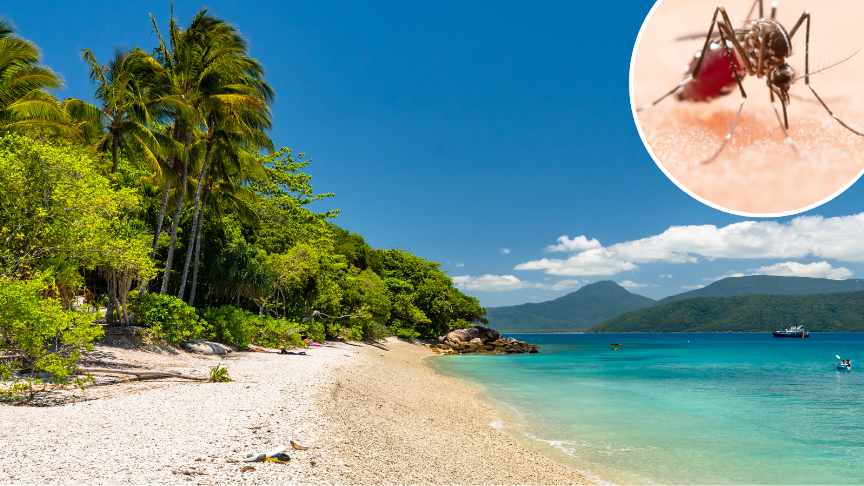
A long-running program to protect people in Far North Queensland from mosquito-borne viruses has been so successful that it has now naturally spread to a popular Great Barrier Reef island.
For more than 15 years, the World Mosquito Program has worked with Queensland Health to help safeguard the region from diseases like dengue.
The program releases Aedes aegypti (dengue) mosquitoes carrying a naturally occurring bacteria called Wolbachia.
This bacteria is found in more than 50 per cent of all insect species and stops the mosquitoes from transmitting viruses such as dengue and Zika.
The first Wolbachia-infected mosquitoes were released at Yorkeys Knob in 2011.
Since then, the program has released mosquitoes in many locations across Far North Queensland.
Entomology teams at Cairns Public Health Unit regularly check wild mosquito populations to see how many carry Wolbachia.
Gerhardt Ehlers, Director of Entomology at Cairns Public Health Unit, said the bacteria was first only found near the original release sites.
Now it is widespread throughout the Cairns region.
‘Interestingly, we have also detected Wolbachia-infected mosquitoes on Fitzroy Island, about 30 km southeast of Cairns,’ Mr Ehlers said.
‘Dengue mosquitoes usually only fly a couple of hundred metres, so it’s likely people accidentally carried hardy mosquito eggs to the island on boats, clothing or gear.
‘Even so, this shows just how successful and far-reaching the program has become.
‘Fifteen years after the first releases, the Wolbachia infection rate in wild Aedes aegypti mosquitoes is still very high. This means the risk of dengue on Fitzroy Island is low - so visitors can safely enjoy snorkelling and relaxing at the resort.’
While the Wolbachia program is very effective against dengue and Zika, Mr Ehlers reminded people to remain vigilant.
Other mosquitoes can still spread serious illnesses, including Ross River virus, Barmah Forest virus, and Japanese encephalitis.
‘Protect yourself by avoiding bites,’ he said.
‘If you don’t get bitten, you can’t get infected. Some mosquito-borne viruses can cause serious illness or even be life-threatening.’
Simple steps to prevent mosquito bites:
- apply an effective insect repellent containing DEET, Picaridin, or Oil of Lemon Eucalyptus to exposed skin and reapply as directed
- wear loose, light-coloured clothing with long sleeves, long trousers, socks, and covered footwear when outdoors
- use insecticide sprays, vapour dispensers, or mosquito coils outdoors in well-ventilated areas
- when camping, use properly screened tents or sleep under a mosquito net.
For more information on mosquito-borne diseases, symptoms, and prevention, visit the Queensland Health website.