
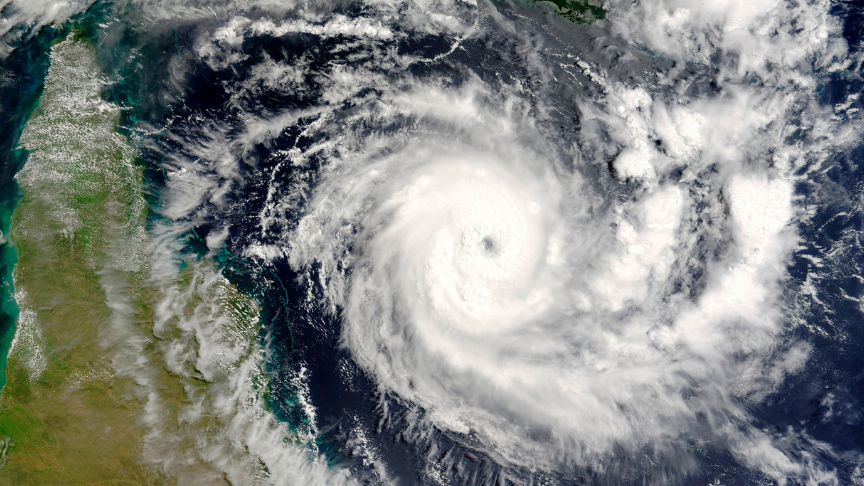
Before the start of every wet season, a large group of our staff carry out a simulation exercise to get us physically and mentally prepared for whatever the storm season throws at us.
The exercise usually involves a looming cyclone or flood, and the steps our staff need to go through to protect patients and colleagues, such as ensuring everyone is up to date on all our plans and strategies whenever and wherever disaster strikes.
The event over-emphasises the threat a natural disaster can have upon Cairns Hospital - for good reason.
In 150 years of delivering healthcare to the Far North, the hospital has never (thankfully) received major structural damage by a severe weather event.
However, this is always front of mind every storm season and we are now taking further steps to ensure the resilience and protection of the region’s core health asset.
First and foremost, is the establishment of a new rooftop helipad, shifting it from the parkland on the Cairns Esplanade.
Construction of the helipad and its associated lift core has started and will take around 12 months to complete. The new helipad will sit adjacent to the rooftop of Block D and bridge across to the new lift core. The lift core will have duty and standby lifts, cyclone doors to protect from storm surge and a back-up above-ground link to the hospital on level 1.
Once commissioned, sick or injured patients will be flown onto the rooftop helipad and transported via specially constructed lifts to the ground floor to access the Emergency Department or, if required in the event of a compromised ground floor access, directly across to level 1 including intensive care and operating theatres.
As we progress with implementing our $1+ billion Stage 1 of the Cairns Hospital Master Plan, there are three new buildings expected to be completed by 2031.
This includes the new Health Innovation and Surgical Centre; a new health office building referred to as the Health Management Hub; and a new 950 bay multi-storey staff carpark.
The new Health Innovation and Surgical Centre will be built to a higher building standard than the existing hospital, making it the most resilient building to withstand cyclone events on the hospital campus. It will be built to endure extreme weather events, including 1 in 500-year floods with allowances for climate change.
In particular, it will improve the hospital’s resilience as it will include operating theatres, a sterile supply department, satellite pharmacy, radiology, kitchen and logistics.
If the existing Emergency Department is compromised by a severe weather event, patients can be transferred to the theatres, recovery and outpatient spaces in the new Health Innovation and Surgical Centre, that can be repurposed to provide emergency and critical care.
Future stages of our Master Plan go even further to disaster-proofing our hospital.
All of our acute care services, including operating theatres, intensive care, maternity and acute care wards, would relocate into new buildings next to and connected with the Health Innovation and Surgical Centre, well away from the storm surge zone on the Cairns Esplanade. The newest of the existing buildings will then be re-purposed for outpatients and other day patient functions, increasing access to care for cancer and chronic conditions, along with additional spaces for research, education and patient and staff amenities.
By relocating critical acute services away from the vulnerable coastal fringe, we are not only mitigating the immediate risks of storm surge and flooding but also building in adaptability for the escalating impacts of climate change.
This forward-thinking approach ensures continuity of care during disasters, reducing the likelihood of mass evacuations that disrupt patients, strain resources, and burden communities.
When the next big storm approaches, our community can have confidence that the hospital will stand strong, ready to serve without interruption.