
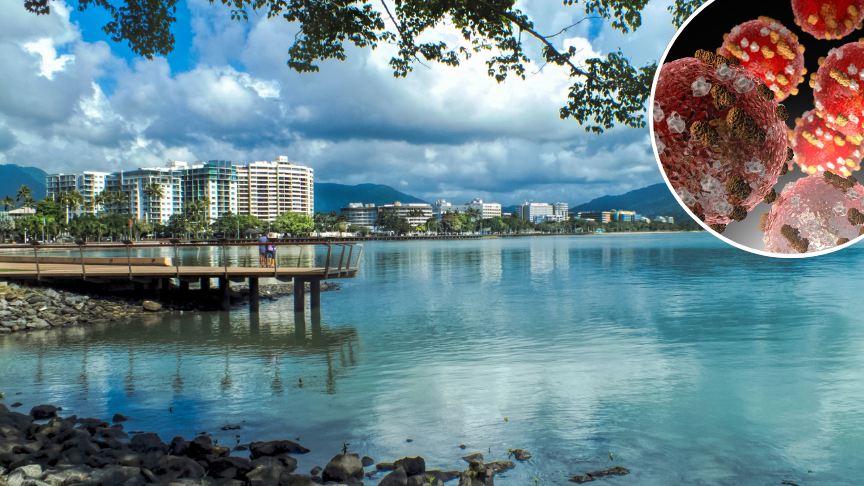
A measles outbreak that infected nearly a dozen people in Cairns last year, including hospital staff, has been traced back to a single imported case.
Health officials have released a report on the measles outbreak that was detected in Cairns in September 2025, the largest experienced in the city in nearly three decades.
The outbreak was traced back to a tourist arriving from Indonesia.
Indonesia has been experiencing ongoing outbreaks of measles since the early-2020s, reporting nearly 600 laboratory-confirmed cases and five deaths earlier this year.
Cairns Public health Unit physician Dr Tonia Marquardt said the outbreak in Cairns from a single case imported from overseas demonstrated how easily and rapidly the disease could spread in the community.
‘We had a person infected with measles who was staying at a backpackers hostel,’ Dr Marquardt said.
‘This person sought treatment at Cairns Hospital’s emergency department, and infected multiple people including hospital staff.
‘These staff, while unknowingly infectious, accessed parts of our hospital where some of our most patients at highest risk of illness were being treated.
‘Fortunately, most of the people who were infected had been vaccinated against measles, so they did not transmit the virus to others.’
Dr Marquardt said the outbreak required extensive work in contact tracing, communication, co-ordination and documentation throughout the region and state.
‘We investigated more than 125 suspect cases reported from across the Cairns region during the outbreak,’ she said.
‘We identified 48 venues as potential exposure sites – including various wards at Cairns Hospital.
‘In total, 1,481 people were notified as potential contacts.’
Dr Marquardt said the outbreak was a reminder about the importance of vaccination against measles, including consideration for boosters for those working in healthcare settings.
‘While we had a few confirmed cases in a relatively short period of time from this outbreak there was no onward transmission. The numbers could have been much, much higher if most people were not vaccinated against measles,’ she said.
‘Measles is highly contagious, but it’s also preventable.
‘Vaccines save lives.
‘High vaccination rates don’t just protect individuals; they create herd immunity, which helps safeguard those who cannot be vaccinated due to medical reasons.
‘This outbreak could have been far more widespread if not for the strong vaccination coverage in our community.’
According to the World Health Organisation, global measles infections recently surged to an estimated 11 million cases annually, resulting in up to 107,500 deaths, primarily among unvaccinated children under five.
Dr Marquardt urged everyone to stay up to date with their vaccines, particularly young children. She also advised travellers to ensure they are fully vaccinated before heading overseas.
‘Check your vaccination status before leaving Australia. It’s a simple step that can protect you and prevent bringing the disease back home,’ she said.
For more information about vaccination against measles, head to Vaccination Matters.