
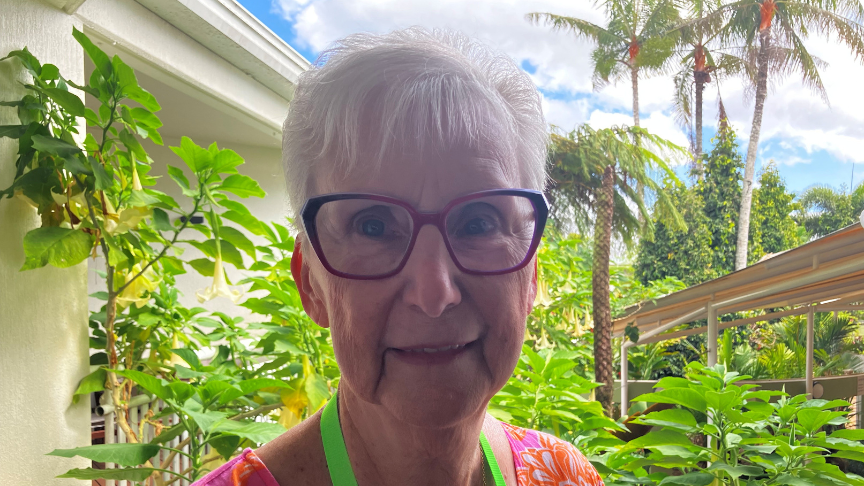
For most of their nearly five decades of marriage, Deborah’s husband has lived with mental health challenges, including depression and bipolar disorder.
In recent years, however, Deborah said the care he received through Cairns Hospital and a multidisciplinary team made a significant difference to his health and wellbeing.
A key turning point came when his GP began coordinating referrals to a range of mental health and clinical support services, connecting him with Cairns Hospital specialists who looked at both his mental and physical health together.
After later being diagnosed with dementia, he was referred to the Older Persons Evaluation, Rehabilitation and Assessment (OPERA) unit, where Deborah said the benefits of a connected team approach became clear.
‘That was the first time, really, that he met a whole team of people who worked together,’ Deb said.
‘Whilst he has dementia, he is healthier now than he has ever been.
‘It’s still a slow decline, but very slow. He’s happier.
‘He’s living at home, interacting with family to some extent, and goes out a couple of times a week with carers.’
Almost half a million Australians are living with dementia today and over 1.7 million people are involved in their care.
Early diagnosis and coordinated support can help people living with dementia, and their families, plan ahead and access the care they need.
Deb said the coordinated care her husband received had helped him remain at home, stay connected with family, and enjoy a better quality of life.
‘People need integrated care - that connectedness and cooperation between different health professionals,’ she said.
‘People are whole people; their mind and body are always connected.
‘The involvement of the family is vital too, because they live with these people every day.’
Cairns Hospital staff specialist Dr Ajay Macharouthu said connected, whole-person care was increasingly important for older patients with complex needs.
‘We’re trying to break the silos and bring people from multiple disciplines together to integrate and collaborate for the best outcomes with a person-centred approach,’ Dr Macharouthu said.
‘Integration needs to happen at every level: within hospitals between geriatrics, psychogeriatrics and general medicine, and between secondary care and GPs in the community, to truly make a difference for patients.’
For more information about older persons’ mental health services, visit Cairns Hospital older persons mental health.